
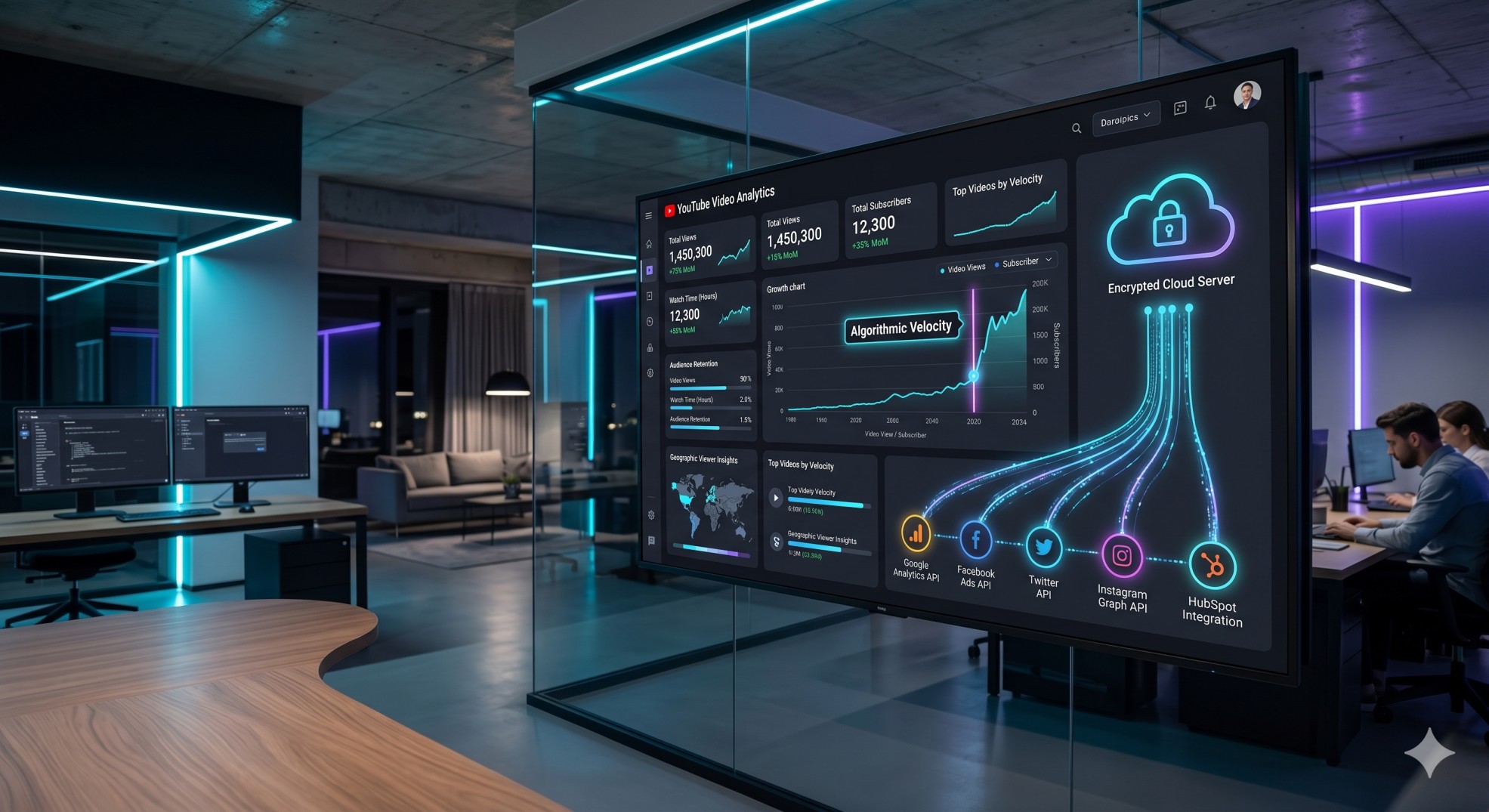
To rank a video in 2026, you cannot rely solely on metadata. YouTube’s algorithm prioritizes initial “Video Velocity” and high-retention watch time in the first 24 hours. Digital agencies safely trigger this algorithmic push by using high-quality automated engagement to simulate organic community momentum, boosting Click-Through Rates (CTR) and Session Starts before algorithmic spam filters can flag the content.
The Evolution of YouTube’s Algorithm in 2026
If you are an agency owner, content creator, or digital marketer, you already know that the days of uploading a video with heavily stuffed tags and watching it organically climb to page one are over. Today, YouTube operates on an advanced, AI-driven recommendation system heavily influenced by Large Language Models (LLMs) and predictive behavioral tracking.
Search engines and video platforms now look for Entity Trust and Corroborating Signals. If a brand-new channel uploads a masterpiece but receives zero traction in the first 48 hours, the algorithm classifies the video as “low-interest” and buries it.
To break out of this sandbox, you must generate algorithmic momentum. This is where understanding how to effectively use a youtube smm panel becomes the secret weapon for top-tier digital agencies.
Why “Velocity” is the Ultimate Ranking Factor
YouTube’s AI does not rank videos based on how many total views they have; it ranks them based on how fast they accumulate high-quality engagement immediately after publishing. This is known as Video Velocity.
The algorithm measures three critical metrics during this velocity phase:
- Click-Through Rate (CTR): How many people click your video when it is shown on the homepage or search results.
- Average View Duration (AVD): Are viewers staying for 10 seconds, or are they watching 60% of the video?
- Session Starts: Does watching your video cause the user to stay on YouTube and watch more content?
If you can artificially simulate these three metrics safely, YouTube’s AI will assume your video is highly valuable and begin recommending it to genuine, organic viewers.
Step-by-Step: How To Rank Videos Using A YouTube SMM Panel
Executing this strategy requires precision. If you blast 50,000 low-quality bot views to a video in one hour, YouTube’s anti-spam filters will flag the anomaly, drop the views, and potentially shadowban your channel. Here is the exact framework RathoreSEO recommends for safe scaling.
Step 1: Pre-Optimization (The Organic Foundation)
Automation only amplifies what already exists. Before you inject any social proof, your video must be perfectly optimized for organic discovery.
- Entity-Based Titles: Use natural language phrasing optimized for both YouTube Search and Google AI Overviews.
- High-Contrast Thumbnails: Your thumbnail must command attention to maintain the CTR once organic traffic takes over.
- Timestamp Schema: Break your video into chapters. This allows Google Search to index specific moments of your video directly in the SERPs.
Step 2: Selecting the Right Infrastructure
Not all panels are created equal. Amateur marketers use cheap panels that deliver low-retention bot traffic. Professional agencies integrate with a premium youtube smm panel that guarantees high-retention, non-drop engagement.
When choosing your infrastructure provider, look for these non-negotiable features:
- High-Retention Views: The views must originate from unique IP addresses and watch a significant percentage of the video (ideally 60% or more).
- Drip-Feed Capabilities: You must be able to schedule the delivery of views over several days rather than all at once.
- API Access: For agencies managing multiple clients, backend integration is crucial for automated campaign scaling.
Step 3: Executing the Drip-Feed Strategy
The secret to bypassing spam filters is mimicking natural human behavior. Once your video is live, do not send traffic immediately. Wait 1 to 2 hours for YouTube to index the video organically.
Then, initiate a drip-feed campaign through your youtube smm panel. If your goal is 5,000 views to trigger the algorithm, schedule the delivery to distribute evenly over 72 hours. This gradual incline looks identical to a video that is organically gaining traction through a viral social media share or an email newsletter blast.
Step 4: Stacking Social Signals
Views alone are not enough in 2026. The AI algorithm expects a natural ratio of engagement. A video with 10,000 views but 0 likes and 0 comments is an immediate red flag.
As your drip-feed views roll in, layer in corroborating social signals:
- Likes: Maintain a natural ratio (typically 3% to 5% of your total view count).
- Shares: Automated shares to platforms like Facebook, Reddit, or Telegram signal to YouTube that your content is driving external traffic back to their platform.
- Custom Comments: Avoid generic “Great video!” comments. Inject highly relevant, keyword-rich custom comments that spark actual conversations.
The Dangers of Low-Quality Panels (Spam Filter Traps)
As a digital growth consultant with over 19 years of experience, I frequently audit agency campaigns that have crashed and burned. The number one culprit? Greed.
Opting for the cheapest views available guarantees a massive drop rate. YouTube’s algorithm identifies these views, removes them from your counter, and heavily penalizes your channel’s “Trust Score.” Always prioritize quality over quantity. 1,000 high-retention views will do infinitely more to rank your video than 20,000 instant, low-retention bot views.
Combining Automated Velocity with Organic SEO
The ultimate goal of scaling social proof is not to fake your way to success indefinitely. The goal is to build an algorithmic bridge.
Automated social signals act as the initial spark. They push your video past the initial sandbox phase and place it on the homepage of real, organic users. From there, your actual content quality, your thumbnail, and your core SEO strategy must take over to retain that newly captured organic audience. By combining technical SEO frameworks with intelligent, API-driven social velocity, digital agencies can reliably scale client authority in highly competitive niches.
Frequently Asked Questions (FAQ)
Does using automated engagement violate YouTube’s terms of service? Yes, utilizing synthetic engagement explicitly violates platform terms. However, top agencies bypass detection by utilizing high-retention, drip-feed delivery systems that accurately mimic organic human behavior and community growth, avoiding the algorithmic triggers associated with low-quality spam.
How many initial views do I need to trigger the YouTube recommendation algorithm? There is no magic number, as it depends on your specific niche competition. However, a steady, high-retention drip-feed of 1,000 to 5,000 views within the first 48 to 72 hours is generally sufficient to establish initial “Entity Trust” and trigger homepage recommendations.
What is the most important metric for ranking a YouTube video in 2026? Average View Duration (AVD) combined with Click-Through Rate (CTR). High total views mean nothing if the retention is low. YouTube prioritizes videos that keep users on the platform longer, which is why utilizing high-retention engagement services is strictly mandatory.
About the Author
Mahesh Chand Founder of RathoreSEO | 19+ Yrs SEO Expert | AI-Driven Search Strategy Specialist
With over 19 years of hands-on experience in the digital marketing ecosystem, Mahesh Chand is a seasoned SEO and Digital Growth Consultant based in Haryana, India. As the Founder of RathoreSEO, he has led technical SEO, Google Search Intelligence, and programmatic growth strategies for over 1,000 brands globally. From developing advanced intent-mapping systems to optimizing enterprise-level B2B campaigns, Mahesh specializes in building ROI-focused SEO systems that adapt to AI and LLM-powered search engines. His mission is to simplify complex digital strategies and agency infrastructure for modern marketers and entrepreneurs.